
1 in 5 Americans Over 75 Have No Natural Teeth. A Brooklyn Dentist Is Putting $1 Million Toward Changing That
BROOKLYN, N.Y. – Nov. 27, 2026 – Tooth loss rarely stops at one tooth. Complete tooth loss affects 1.2% of U.S. adults aged 35 to 49, 5.9% of those 50 to 64, 11.4% of those 65 to 74 and 19.7% of those 75 and older, according to the CDC. Along the way, the jawbone shrinks, chewing gets harder, and research links complete tooth loss to poorer nutrition and a higher risk of death in older adults.
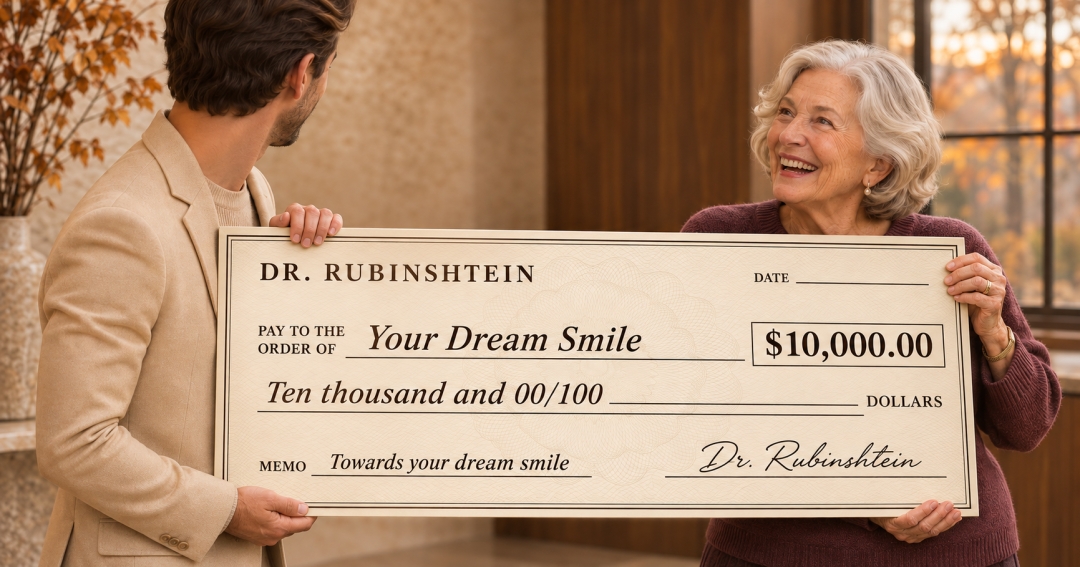
On Thanksgiving, a holiday built around a shared meal, Dr. Geoffrey Rubinshtein, a periodontist at Bensonhurst Dental Care in Brooklyn, is offering more than 100 patients the chance to trade in their current dentures for a credit of up to $10,000 each toward full-arch implants. For many people who wear dentures, the holiday table is where the problem shows up. The program is worth up to $1 million and runs through December 25, 2026, or until the credits are used, whichever comes first.
“This is the season to care for family, especially those who once took care of us,” said Dr. Rubinshtein. “We’ve helped hundreds of patients this year, and we’ve seen how it transformed their lives. As part of our end-of-year holiday initiative, we want to help more patients this holiday season.”
The credit is meant for patients who need that final support to get the work done. Dr. Rubinshtein says the practice’s approach allows for a much faster recovery, and patients leave with a smile that looks and feels natural to them.
What missing teeth do over time
The changes start as soon as a tooth is lost. The bone that held the tooth begins to shrink, and that loss is irreversible. It is fastest in the first three months. In molar sites, a pooled analysis found the ridge narrowed by an average of 3.6 millimeters after natural healing.
Dentures replace the look of teeth, but not all of the work. A 2021 systematic review of studies on removable dentures found that eating function was worse in full-denture wearers than in people with natural teeth in 14 of 15 studies, and worse in partial-denture wearers in 6 of 7.
That shows up on the plate. People who struggle to chew tend to skip raw vegetables, fruit, nuts and tougher cuts of meat. One study of denture wearers found they ate fewer fruits and vegetables than people with natural teeth, even after getting new dentures.
It also shows up in bloodwork. A 2022 study in the Journal of Prosthodontics from the Regenstrief Institute and Indiana University School of Dentistry matched dental and medical records for 3,519 people who received dentures and 6,962 who did not. After getting dentures, patients’ blood levels of albumin and calcium dropped. Compared with the control group, denture wearers also had lower albumin, protein and calcium. The authors said the results point to a risk of undernutrition and suggested nutrition counseling for denture patients.
The longest view comes from a 2025 study in Frontiers in Oral Health. Researchers followed 3,726 Chinese adults aged 65 and older for an average of 9.4 years. Those who had lost all their natural teeth were 60% more likely to die from any cause than those with only mild tooth loss, after adjusting for other factors. The study is observational, so it shows an association, not proof that tooth loss causes early death, and it did not look at dentures.
Missing teeth and dental implants by the numbers
- 10.2% of New Yorkers aged 65 and older have had all their teeth removed because of decay or gum disease, according to America’s Health Rankings (2024 data).
- Older adults who still have some natural teeth are missing 6.4 on average because of disease, according to the CDC.
- 8.4% of U.S. adults 50 and older had at least one dental implant in 2015 to 2020, up from 1.3% in 1999 to 2004, according to a 2024 analysis of federal health survey data in the Journal of the American Dental Association.
- Among U.S. adults missing teeth, implant use rose from 0.7% in 1999–2000 to 5.7% in 2015–2016. It was about twice as common among people with private insurance, and among those with more than a high school education, according to a Journal of Dental Research study.
- The American Academy of Implant Dentistry estimates that 3 million Americans have implants, with about 500,000 more each year.
- Original Medicare does not cover dentures or dental implants, so most seniors pay out of pocket, according to the NCOA.
Dental implants vs. dentures
Dentists have favored implant-supported dentures for years. A 2002 consensus statement from McGill University named the implant-retained lower denture as the first-choice treatment for people with no teeth in the lower jaw, and a small clinical trial published in 2017 found that two lower implants significantly improved chewing efficiency, bite force and patient satisfaction compared with a conventional denture.
The credit applies to Bensonhurst Dental Care’s SameDaySmile procedure, in which patients with failing teeth leave the same day with a temporary fixed set of teeth attached to implants, then receive their final permanent teeth after healing, usually a few months later. Most patients with enough jawbone qualify, and a consultation determines eligibility. The cost is what stops most people. That is the gap Bensonhurst Dental Care says the trade-in credit is meant to close.
How to take part
- Call Bensonhurst Dental Care at (917) 525-1530 or book your SameDaySmile consultation online to see if you qualify, before December 25, 2026.
- Bring your current dentures to a consultation with Dr. Geoffrey Rubinshtein.
- If implants are right for you, the trade-in credit is applied to your treatment plan.
The credit is a trade-in value toward implant treatment, not a cash payment. Eligibility is determined at the consultation, implant treatment is not right for every patient, and results vary. The credit applies only toward full-arch implants, and each person can trade in one set of dentures (upper and lower) for one credit. Financing is available for patients who qualify.
Interviews and patient stories: Dr. Rubinshtein is available for interviews. Patient stories on video are available on request. Video recap of last year’s cases.
About Bensonhurst Dental Care
Bensonhurst Dental Care is a family and cosmetic dental practice at 1872 80th St, Brooklyn, NY 11214, in the Bensonhurst neighborhood. Led by periodontist Dr. Geoffrey Rubinshtein, the practice offers general, cosmetic and implant dentistry, including full-arch implants and SameDaySmile, for patients of all ages.
Media Contact
Company Name: Bensonhurst Dental Care
Contact Person: Kevin Ramirez, Treatment Coordinator
Email: Send Email
Phone: (917) 525-1530
City: Brooklyn
State: NY
Country: United States
Website: bensonhurstdentalcare.com


